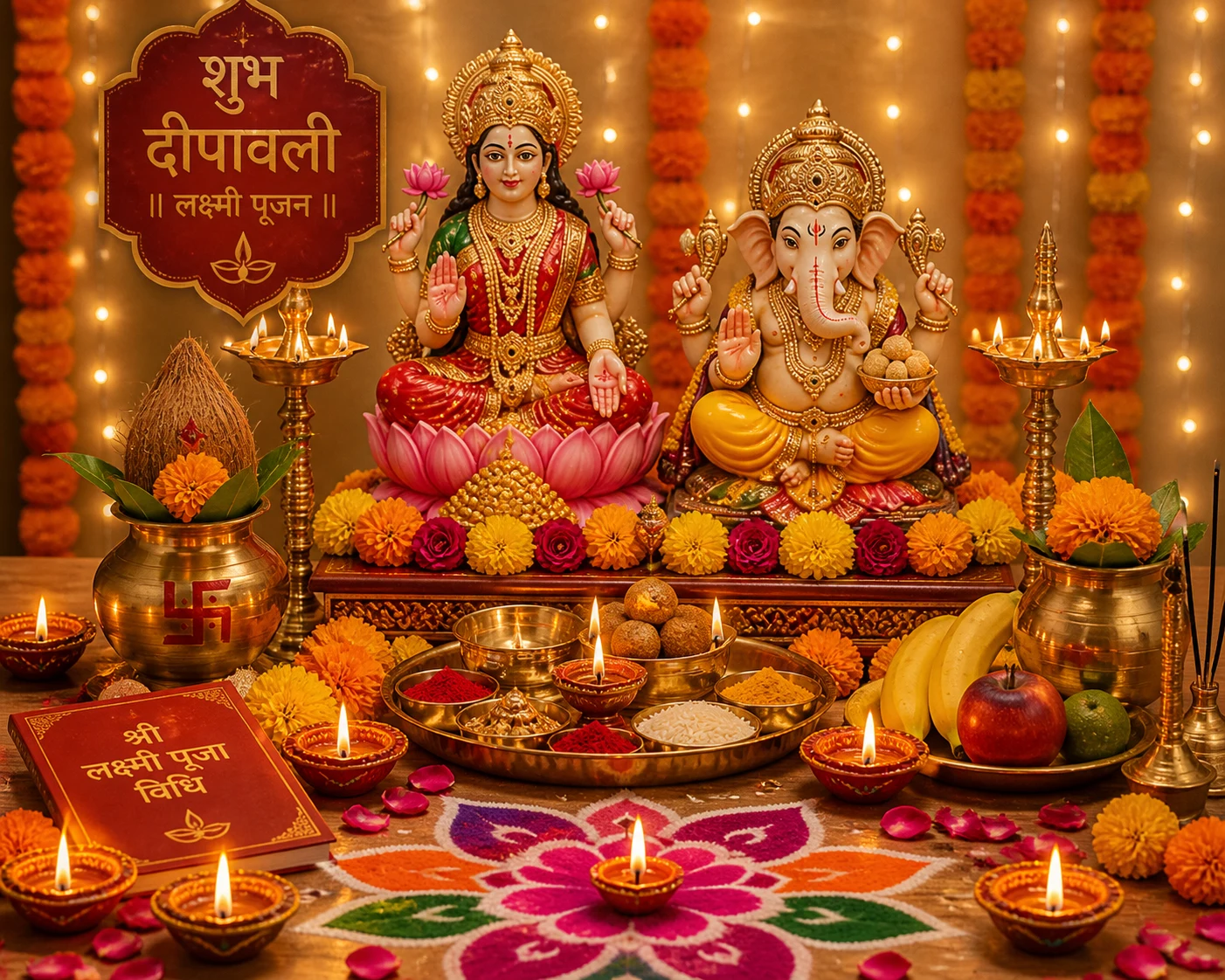
Diwali is one of the most celebrated festivals in India. Families clean their homes, decorate entrances with rangoli, light diyas and spend time together. Among these traditions, Lakshmi Puja holds a special place. It is a time when families worship Goddess Lakshmi and Lord Ganesha and pray for peace, prosperity, good health and happiness.
Performing Diwali Lakshmi Puja at home does not have to be complicated. What matters most is preparing the puja space, understanding the basic rituals and performing the ceremony with devotion.
Many families have questions about the correct Lakshmi Puja vidhi, which samagri to arrange, when to perform the puja and whether a pandit is necessary. This guide explains the traditional process in simple English. Customs may differ between families and regions, so follow your family tradition or consult an experienced pandit when you need guidance.
What Is Diwali Lakshmi Puja?
Diwali Lakshmi Puja is a traditional Hindu ceremony performed to worship Goddess Lakshmi, who represents prosperity, good fortune and well-being. Goddess Lakshmi is commonly worshipped alongside Lord Ganesha, who represents wisdom and the removal of obstacles. Many families also honour Goddess Saraswati, particularly when praying for knowledge and success in education or work.
The ceremony is generally associated with the Amavasya period during Diwali. Families prepare a clean place for worship, arrange the required materials, offer flowers and sweets, chant prayers and perform aarti. For many households, Lakshmi Puja is not simply a request for financial prosperity; it is also an opportunity to express gratitude for what the family already has.
Why Is Lakshmi Puja Performed on Diwali?
Diwali is traditionally associated with the victory of light over darkness and good over evil. Different regions of India celebrate the festival through traditions connected with Lord Rama, Lord Krishna, Goddess Lakshmi and other religious stories.
Lakshmi Puja is especially important in many North Indian households. Families believe that worshipping Goddess Lakshmi on Diwali brings blessings for prosperity, harmony and well-being. Cleaning the home, lighting lamps and decorating the entrance are symbolic ways of welcoming auspiciousness.
Lord Ganesha is usually worshipped before Goddess Lakshmi because wisdom and good judgment are considered essential for using wealth responsibly. The ceremony also brings family members together: children learn about their traditions, elders share their knowledge and everyone participates in preparing the home.
Diwali Lakshmi Puja Shubh Muhurat: How to Choose the Right Time
In many Hindu traditions, the puja is performed during Pradosh Kaal, the evening period following sunset, when the relevant Amavasya tithi is observed. Some families also prefer a suitable Sthir Lagna, particularly Vrishabha Lagna.
A muhurat should not be selected using sunset time alone. The relevant tithi, local sunset, lagna and traditional Panchang calculations may influence the recommended period, and the exact timing changes by location. Check a reliable local Panchang for the correct year and city. For example, Drik Panchang publishes location-based Lakshmi Puja timings; confirm that the displayed city and year match your circumstances.
| Puja time period | Meaning | Traditional use |
|---|---|---|
| Pradosh Kaal | Evening period after sunset | Commonly preferred for household Lakshmi Puja |
| Sthir Lagna | Period when a fixed zodiac sign is rising | Considered suitable for stability and prosperity |
| Vrishabha Lagna | A fixed ascendant period | Often considered for Lakshmi Puja |
| Nishita Kaal | Period around midnight | Followed in certain religious traditions |
| Amavasya Tithi | Lunar day associated with the new moon | Important for determining the traditional observance |
If you are unsure about the timing, avoid choosing a random hour from an undated article. A pandit can help clarify the timing and ritual sequence for families wishing to follow a specific traditional method.
How to Prepare Your Home for Diwali Lakshmi Puja
Choose a peaceful location where family members can sit comfortably. Some households use their regular prayer room, while others arrange a temporary altar in the living room. Place a clean wooden chowki or small table in the selected area and cover it with a fresh red or yellow cloth.
Arrange the idols or photographs of Goddess Lakshmi and Lord Ganesha according to your family tradition. Keep the puja materials nearby so you do not need to leave the ceremony repeatedly. Flowers, diyas, incense, water and prasad should be arranged before the puja starts.
You can decorate the entrance with rangoli and flowers. Keep diyas away from curtains, loose decorations and anything that may catch fire. The goal is to create a peaceful, respectful and safe environment for worship.
Complete Diwali Lakshmi Puja Samagri Checklist
The exact items vary by family custom, region and the type of puja. This checklist covers materials commonly used during household Lakshmi Puja.
| Puja samagri | Purpose |
|---|---|
| Lakshmi and Ganesha idols or photographs | Main deities worshipped |
| Wooden chowki and red or yellow cloth | Platform and covering for the puja |
| Kalash, clean water and Gangajal | Ritual setup, purification and offerings |
| Mango leaves and coconut | Commonly used in kalash sthapana |
| Roli, kumkum, haldi and akshat | Tilak and traditional offerings |
| Fresh flowers | Offered during worship |
| Diya, ghee or oil, and cotton wicks | Lighting lamps and performing aarti |
| Incense sticks or dhoop | Used during worship |
| Fruits, sweets, kheel and batasha | Naivedya or prasad |
| Paan, supari and coins | Symbolic offerings in some traditions |
| Aarti thali | Used for the concluding prayer |
Not every household uses every item. Some families add lotus flowers, seasonal grains, sacred thread or specific offerings. If a pandit is conducting the puja, ask for the samagri list beforehand so that it matches the planned ceremony.
Step-by-Step Diwali Lakshmi Puja Vidhi at Home
The following is a general household method. The exact order and mantras may differ according to your family tradition or your pandit's guidance.
Step 1: Clean the Puja Area and Prepare Yourself
Clean the prayer space and arrange the materials. Family members commonly bathe and wear clean clothes before worship. Place the idols or pictures on the prepared chowki and keep the kalash, flowers, diya and incense within easy reach.
Step 2: Light the Diya
Light a diya near the altar using ghee or oil according to your tradition. Its light symbolizes the removal of darkness and the presence of knowledge and auspiciousness. Keep the flame away from cloth decorations and never leave it unattended.
Step 3: Begin With Purification and Sankalp
The ceremony may begin with a simple purification prayer and aachaman. Sankalp expresses the intention behind the puja. The devotee may offer water, flowers or akshat while praying for family well-being, peace and prosperity. A formal Sanskrit sankalp may include the date, place and details of the person performing the ceremony.
Step 4: Perform Kalash Sthapana
Fill a clean metal kalash with water and arrange it according to your family's method. Mango leaves and a coconut may be placed on top. The exact preparation varies, so follow the practice familiar to your household.
Step 5: Worship Lord Ganesha
Offer flowers, akshat and other customary materials while remembering Lord Ganesha. A commonly used mantra is Om Gan Ganapataye Namah, seeking wisdom and the removal of obstacles.
Step 6: Perform Goddess Lakshmi Puja
Offer flowers, kumkum, akshat and other traditional materials. A commonly used mantra is Om Shreem Mahalakshmyai Namah. Some families perform a detailed Shodashopachara Puja with sixteen offerings; others follow a shorter household prayer. Seek guidance rather than relying on an unfamiliar sequence of Sanskrit instructions.
Step 7: Offer Fruits, Sweets and Prasad
Offer fruits, sweets and other prepared food. Kheel and batasha are traditional Diwali offerings in many North Indian households. After the ceremony, share the offerings as prasad.
Step 8: Perform Lakshmi and Ganesha Aarti
Light the aarti diya and sing or recite the prayers followed in your home. Family members can participate together. Use a stable aarti thali and supervise children carefully around the flame.
Step 9: Distribute Prasad and Complete the Puja
After aarti, offer pranam and distribute prasad. Some families continue with additional prayers or light more diyas. A respectful, well-prepared puja is more meaningful than rushing through an unfamiliar and complicated process.
Simple Lakshmi Puja vs Detailed Vedic Lakshmi Puja
| Feature | Simple home puja | Detailed Vedic puja |
|---|---|---|
| Preparation | Basic altar and common samagri | May require additional materials |
| Procedure | Short household prayer sequence | More detailed ritual sequence |
| Mantras | Common prayers and aarti | Additional Vedic mantras and sankalp |
| Duration | Depends on family practice | Often takes longer |
| Guidance | May be performed by family members | Commonly guided by a knowledgeable pandit |
The right choice depends on your family's preferences and religious practices. A simple puja is not less meaningful merely because it uses fewer materials.
Common Mistakes to Avoid During Lakshmi Puja
- Waiting until the last moment to arrange the puja samagri.
- Using an online muhurat without checking its year and location.
- Combining several regional puja methods without understanding them.
- Treating expensive decorations or large quantities of offerings as essential.
- Leaving burning diyas or incense unattended.
Is It Necessary to Book a Pandit for Diwali Lakshmi Puja?
A pandit is not mandatory for every household Lakshmi Puja. Many families perform the ceremony themselves using traditions passed down through generations.
Some families prefer professional guidance when they want a detailed Vedic ceremony, correct sankalp, specific mantra recitation or help understanding the traditional muhurat. Before arranging a puja, discuss the location, expected duration, samagri and availability. Clarify whether the family or pandit will arrange the materials.
For service information, review WedMePandit's Diwali Pooja service page and contact the team to discuss your requirements and confirm availability.
How to Make Lakshmi Puja Meaningful for the Whole Family
Children can help arrange flowers, prepare the puja area or place decorations under adult supervision. Elders can explain the meaning of the ceremony and share traditions learned from previous generations.
Families can discuss gratitude, the responsible use of money and helping others. Instead of focusing only on decorations or the number of diyas, use the occasion to express appreciation for your home, relationships and opportunities. Diwali is also a suitable time to support people in need through thoughtful acts of kindness.
Frequently Asked Questions About Diwali Lakshmi Puja
What is the best time to perform Lakshmi Puja on Diwali?
Many families prefer Pradosh Kaal and may consider a suitable Sthir Lagna. The correct timing depends on the year, location and Panchang calculations. Check a reliable local Panchang before deciding.
Can I perform Diwali Lakshmi Puja at home without a pandit?
Yes. Many families perform household Lakshmi Puja according to their traditional practices. A pandit may help with a detailed Vedic ceremony or specific ritual guidance.
What are the most important items for Lakshmi Puja?
Commonly used items include Lakshmi and Ganesha idols or photographs, a diya, flowers, kumkum, akshat, water, fruits and sweets. Additional materials depend on family customs.
Which direction should be used for Lakshmi Puja?
Different traditions offer different guidance. Many households prefer an east- or north-oriented arrangement, but the exact setup varies. Follow your family's established practice or consult a pandit.
Which mantra can be chanted during Lakshmi Puja?
A commonly used mantra is Om Shreem Mahalakshmyai Namah. Families may recite other prayers or stotras according to their traditions.
Can Lakshmi Puja be performed in a small apartment?
Yes. A small, clean and comfortable space is sufficient. There is no need for an elaborate altar; make sure lamps and incense are placed safely.
What should I do if I forget an item?
For a simple household ceremony, follow your family's practice. If a specific item is important to a formal ritual, ask the pandit conducting the puja for guidance.
Conclusion
Diwali Lakshmi Puja brings families together in prayer, gratitude and celebration. Whether you perform a simple home ceremony or follow a detailed Vedic procedure, thoughtful preparation makes the experience more comfortable and meaningful.
Choose the muhurat using a reliable local Panchang, arrange the samagri in advance and follow a puja method that respects your family traditions. Most importantly, remember that Lakshmi Puja is not only about financial prosperity. It also reflects wisdom, responsible living, family harmony and gratitude.